Fast storm response
Water that appears quickly can expose a surface-flow route. Note where it first enters the yard and whether it crosses hardscape before reaching grass.

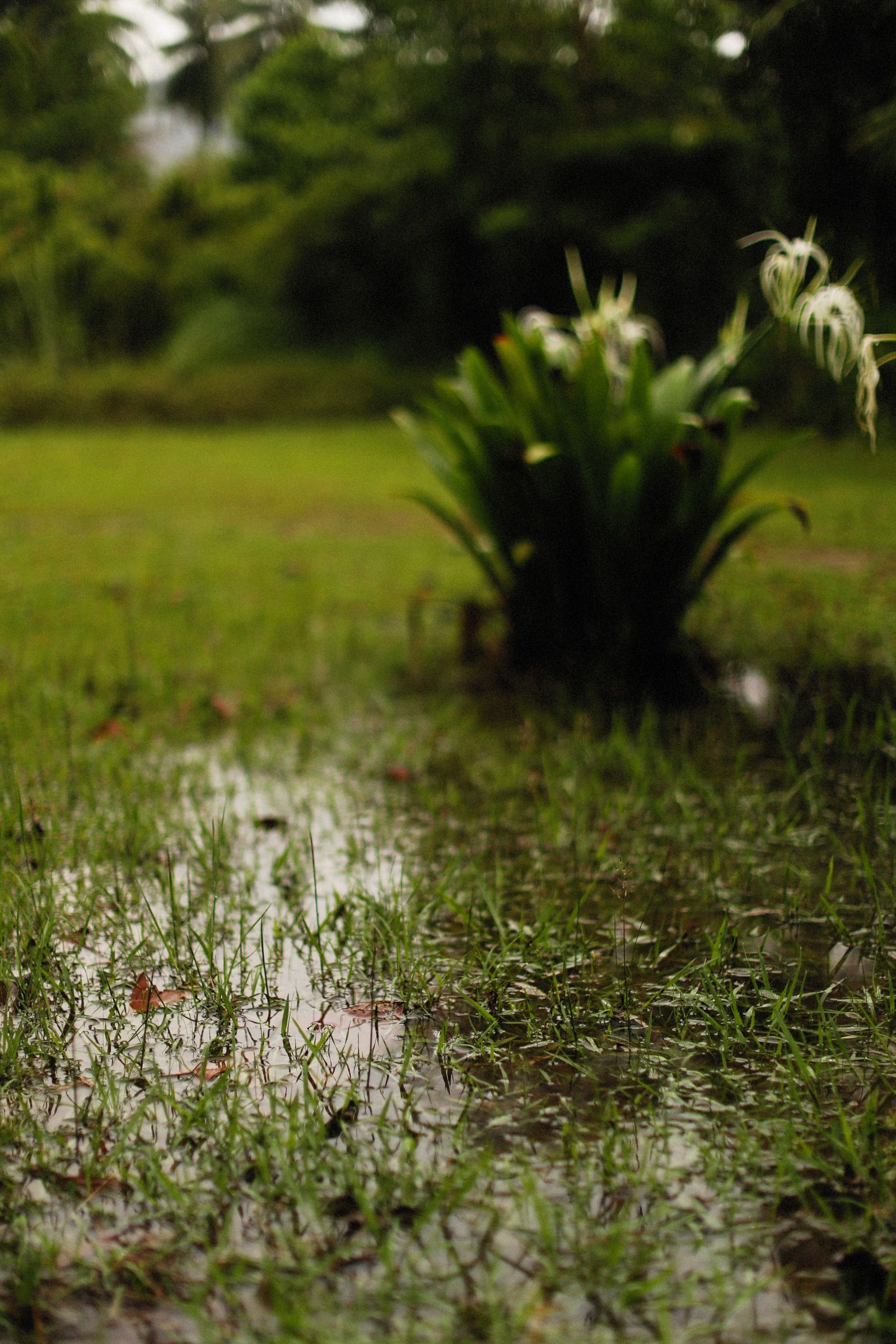
Find the low point, confirm where the water can go, and decide whether the path belongs above ground or in a private-property French drain.
A Moore yard can look nearly flat until a hard rain reveals the actual route. Water may sheet off a patio, pause along a compacted strip, or collect where two shallow slopes meet. That pattern is more useful than the city name alone, so we ask for timing, storm behavior, and a clear description of the property edges.
Water that appears quickly can expose a surface-flow route. Note where it first enters the yard and whether it crosses hardscape before reaching grass.
A visible basin may need more than filling. We check the surrounding elevation so a low-spot repair connects to a continuous, stable surface path.
Hard surfaces can concentrate shallow runoff at one corner or seam. Adjacent grading may help when a suitable surface destination remains available.
Yard regrading can reconnect settled or improperly sloped areas across a wider surface. A shallow swale can give broad runoff a visible path, while a French drain can intercept persistent shallow subsurface water and carry it toward an authorized private-property outlet. Standing-water correction may combine surface and subsurface planning when the surrounding grade supports it.
Every option remains property-specific. Oklahoma rain patterns do not replace an address review: structures, neighboring elevation, property edges, utilities, access, erosion risk, and landscape restoration all matter. Curb cuts, public right-of-way work, and municipal storm or sanitary connections are not offered.
For a useful first conversation, describe what happens during rain, how long the area stays wet, and the wider route from source to destination—including house, patio, walk, fence, and neighboring elevation.
A city page can organize the questions, but it cannot establish coverage, price, access, or the right repair. Those decisions begin with the actual property.
Identify roof runoff, hardscape flow, neighboring elevation, or open-yard sheet flow before focusing on the final wet spot.
Show fences, edging, walks, settled soil, patios, beds, and grade transitions that change how shallow water moves.
Confirm a lower surface that stays within the property plan and does not create a new nuisance at another edge.
Share the full street address, storm timing, and a description of the visible water path so the first follow-up can compare a French drain, grading, or another private-property landscape-drainage approach.
Nothing is booked until you agree.